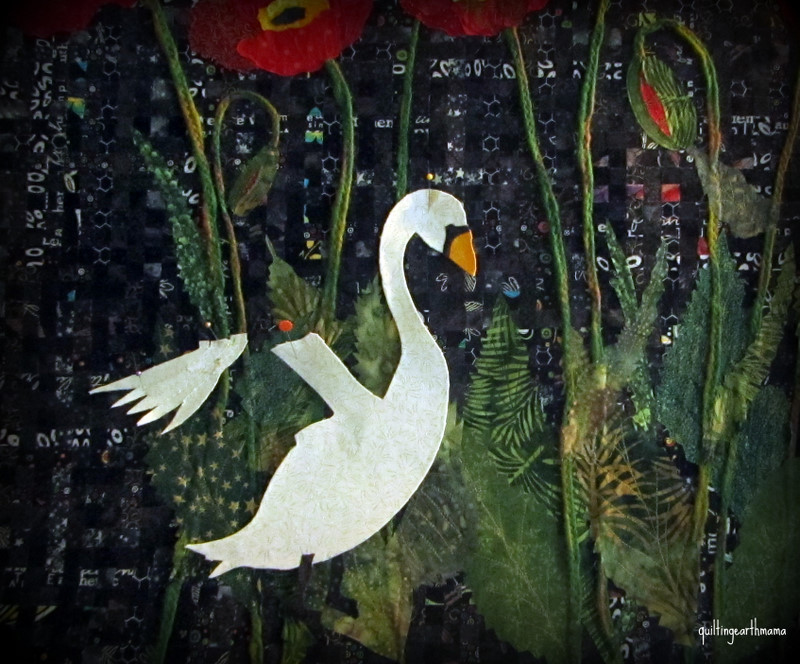
This weeks observations have led me to birds. Unfortunately, I haven't been too able to get my own photos of birds as I am just not fast enough nor is my camera good enough.
It all started with a feather this year.
I was told it looked like a
pileated woodpecker feather, but instinctively I knew it was too small to belong to such a big bird, so like all good students of nature, we brought the feather home and googled it. After some serious searching we discovered it is actually at
red bellied woodpecker feather.
Once we figured that out it then lead us to reading about the folklore around woodpeckers. I have two go to books on Bird Folklore. The first is
Animal Speak and the second is one of those books that I bought on a whim and it has turned out to be an invaluable book on folklore. I think I paid $5.00 for it in the bargain section at Barnes and Noble. It's title is
The Secret Language of Birds.
An interesting thing about woodpeckers according to legend is that they pound louder and faster when it is going to rain. There are many cultures that believe this to be true.
Another interesting fact about them is their red feathers were once used as money for trade because such vibrant red feathers were rare and they were highly valuable.
A few mornings later, I was in the living room reading - I even think I was reading about
swans and I noticed these small little birds on the back porch coming and going a lot. I got up to take a closer look and it turns out they are
house wrens.
These little birds are quite noisy, but when I am typing on the blog or enjoying my morning cup of coffee over whatever I am reading or writing in my journal, I am thoroughly enjoying their song and dance.
Wrens are not afraid to build close to humans which I think is pretty cool. I know a lot people wouldn't be thrilled with the prospects of having a nest on their back porch, but its a great learning opportunity for us homeschoolers to really observe bird activity.
Naturally, this sparked more curiosity about wrens, so we pulled the books back out and learned that wrens often build more than one nest to fool predators. These other nests are called dummy nests. It is possible the wrens are building a dummy nest on the back porch, but it doesn't matter to us. We're learning so much about them either way.
There is an interesting story about the wren being the king of the birds.
Eagle was being arrogant about how high he could fly so he challenged all the other birds to see who could fly the highest. Wren, being such a smart and cunning little bird, climbed on Eagles back, but Eagle was so full of himself he didn't notice since wren is so small. When Eagle got as high as he could go, Wren jumped off and flew a little bit higher and became the king of the birds proving Eagle was not as smart as he thought he was. GO WREN!
On Tuesday afternoon, the kids were walking in the woods and the found a whole bunch of feathers. Being inspired by the woodpecker feather and being good homeschooled students, they brought the feathers home to see if we could figure out what kind of birds they belonged to.
As best as we can tell, most of them are bluejay feathers, but 2 of them are barred owl feathers. They found them all in a big pile together, so my guess is the owl maybe got to close to the bluejay or one of its babies and maybe it was defending the nest and lost or lost a lot of feathers? We will never know, but we got our books back out and learned some interesting things about these birds as well. (THIS is homeschooling at its best!)
Blue Jays are excellent mimics of
red shoulder hawks - I'm sure you have heard them as they are loud when they are giving this call - some believe it might be that they are letting other Jays know there is a predator bird around - I frequently hear it when I'm walking near their nests in the woods.Maybe they think I am a predator bird also.
In folklore, they are known as a war bird because of their ability to mimic the war cry of the hawk and because they will fearlessly defend their territory fighting off owls and hawks and anything else that comes too close. Blue Jays don't mess around. (Guess this may be for real how they came to find the feathers as the kids found them near where I often see Blue Jays in my wanderings.)
The
Barred Owl feather was much harder to identify as it is similar to quite a few other feathers.
One fact we discovered about it is that it doesn't make a sound when you swish it through the air. Every other feather we have found makes a swishing sound. Owls make no sound when they fly. I guess it is suiting that the feathers are also silent. How cool is that?!
There is so much folklore around owls I would be telling you stories for days about them. Today we will leave these majestic birds to the great mystery and I will just remind you that owls have incredible eyesight and can turn their necks 270 degrees around. They can see almost all the way around them. Not only do they have great eyesight, they also have excellent hearing and their ears are placed in such a way that they can also hear all around them.
I have never seen an owl in the wild since I am typically looking down being an
Earthgazer and all, but now that I know we have one hanging out in the woods, I'm going to be looking up a bit more often.
One last thought I will leave you with today is that if you have any interest in identifying feathers I hear
THIS book is a great book. Some friends of mine got to spend some time studying feathers with the author and have had only good things to say about him as well as the book, so I will be adding it my library VERY soon.
I'm going to the river tomorrow with my dance troupe
Shakti Project - maybe I will be inspired to dance like the birds that live on the water at
EarthSong.
Enjoy your weekend and I will see you on Monday!